
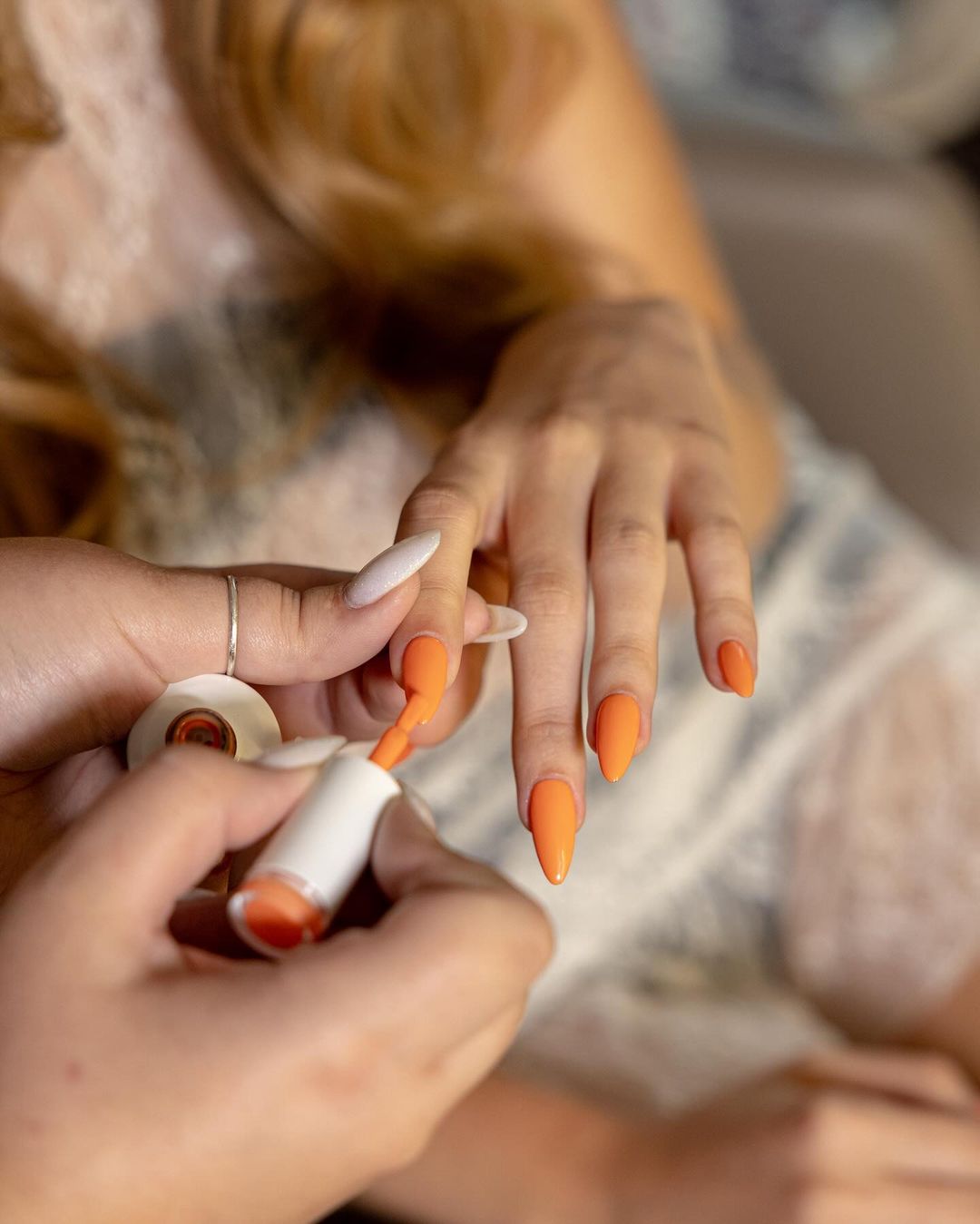
Gel polish is a popular way to achieve durable and beautiful nails, but like any beauty treatment, there can be challenges. Sometimes, even if you follow the instructions meticulously, the result might not be perfect. In this blog post, we'll go through the most common problems that can occur during a gel polish application and provide tips on how to avoid them.
1. Gel polish lifting from the cuticle line
A very common problem is that the gel polish lifts off as a whole strip or starts to fray at the edges or near the cuticles. Several factors affect durability:
- Cuticle care: A neat and long-lasting gel polish starts with a carefully prepared base. If the cuticles have grown over the nail, it's important to push them back. Gel polish applied over the cuticle will easily lift at the edges and also poses a risk for developing allergies.
- Nail surface buffing: The nail surface should be lightly buffed to ensure good adhesion of the polish. We recommend using a softer buffer file for buffing natural nails. Over-filing the natural nail can also cause durability issues!

Nail cleaning: Gel polish won't adhere properly to oily and moist nails. Before applying the base coat, the nail should be cleaned with a cleanser! A cleanser disinfects and removes impurities and moisture from the nail. The best choice for this purpose is a cleaning agent that does not contain water. In addition to a cleanser, it might be good to use Bluesky's PH Bond to remove the last remnants of moisture from the nail.
2. Chipping or lifting of gel polish from the nail tip
This is one of the most common problems with gel polish, for which there are a few solutions:
- More supportive base coat: If your natural nail is weak and flexible, the gel polish won't bend with the nail, causing it to lift. The solution is a thicker and more supportive base coat to prevent the nail from bending, thus keeping the polish adhered. If a strengthening base coat is not supportive enough, a builder or gum gel can also be used.
-
Thicker layer: If the gel polish layers are too thin, the polish is weak and may start to crack with use.
-
Tip sealing: Gel polish lifting from the tip may also be due to the nail tip not being properly sealed. Remember to apply gel products all the way to the tip of the nail if the nail is long enough.
- Typically, gel polish is started after nail preparation with a base coat. Depending on the quality of the nail, a base coat alone may not be sufficient for everyone, and optional base products may need to be used before it.
Often, nails are so moist that a cleanser is not drying enough. In such cases, Bluesky's PH Bond (also known as dehydrator) is an absolutely essential product that solves durability problems for many. In addition to this, you can try a primer from the same brand or a different base coat.
What is a base coat? A base coat is the foundational layer used in gel polish application, which prepares the natural nail for color application. The base coat is an essential product in gel polish that adheres the gel polish to the nail and extends the wear time of the polish. A base coat is not only a base for gel polish, but it also plays an important role in protecting the natural nail.


4. Under-curing of gel polish
The sticky surface of gel polish and proper curing raise many questions. Gels typically have a sticky surface after curing, which is completely normal and helps the layers adhere to each other. If the polish has not cured correctly, it will be soft throughout and the surface will be wrinkled. Under-cured polish increases the risk of allergies, so it's important to find the cause.
- Gel polish applied too thickly: Especially with dark and pigmented shades, an excessively thick layer prevents the product from curing properly. A too thick layer also increases the risk of sensitization to allergies, as light rays do not penetrate the thick layer of polish and the gel polish does not cure completely. Therefore, it's better to apply two thinner layers than one too thick!
- Incorrect or inefficient UV/LED lamp: Lamps and gel polishes vary, so it's important to know which products you are using and if they work together. Bluesky and Inveray gel polishes cure with a UV lamp in 2 minutes and with an LED lamp in 60 seconds. Always check which light your products cure with; nowadays LED lamps are more common. UV/LED combination lamps are the most efficient, where 60 seconds is sufficient.
The wavelengths of light also vary in different brands of lamps, which may lead to under-cured gel. We recommend using the nail lamp of the nail product's own brand or finding out about the compatibility of the lamp and polishes to ensure proper gel curing.
5. Hypersensitivity or allergic reaction
The popularity of gel polish has grown, but like all cosmetic products, gel polishes can also cause hypersensitivity reactions and allergies. Although gel polish is generally safe, some individuals may experience skin irritation or allergic reactions to gel ingredients. This can cause redness, swelling, itching, or even a rash around the nail. Therefore, use gel products carefully and avoid skin contact with gel products! Uncured gel or gel in contact with skin can trigger an allergy even from a single use. Wipe gel products off the skin immediately with a cleanser, and do not cure your nails if there are gel products on your skin. If you suspect an allergy, it is important to stop using gel polish and consult a dermatologist. Applying gel polish can be challenging, but with a little care and the right techniques, most problems can be avoided. So, remember to prepare your natural nails carefully, apply the gel evenly, avoid skin contact with gel products, and ensure correct curing time.
If you follow these tips, you can enjoy beautiful, safe, and long-lasting gel polish for up to 4-5 weeks!
